Our services

From alterations and repairs to made to measure.

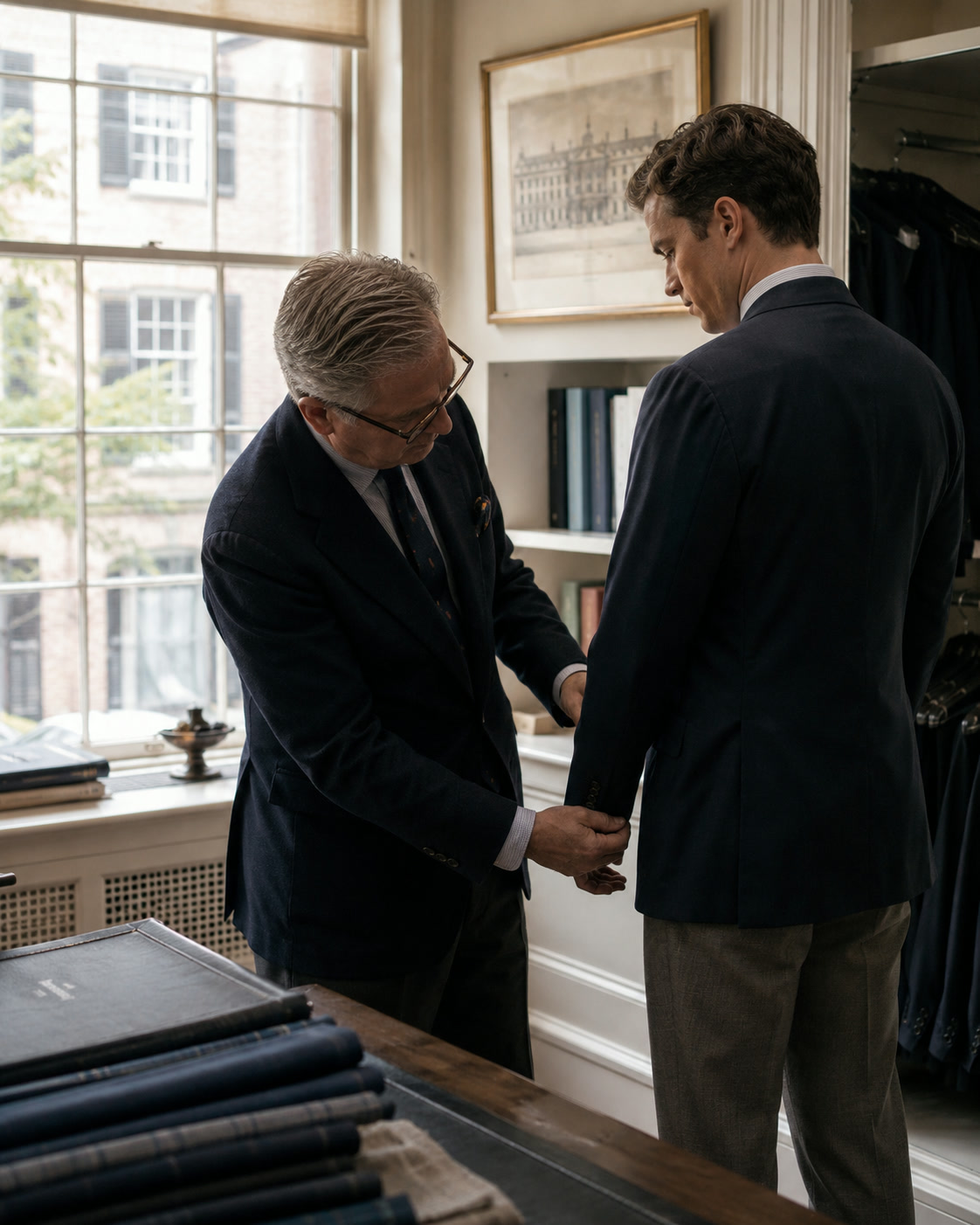
We do the full range of tailoring work, from a quick hem to a fully custom suit. Every garment is pinned and fitted in person.

A fitting in the rooms above Charles Street.
Made to measure clothing
Suits, sport coats, trousers, and overcoats built to your measurements, with a choice of fabric, lining, and finishing detail. Fitted once before the garment leaves the shop.
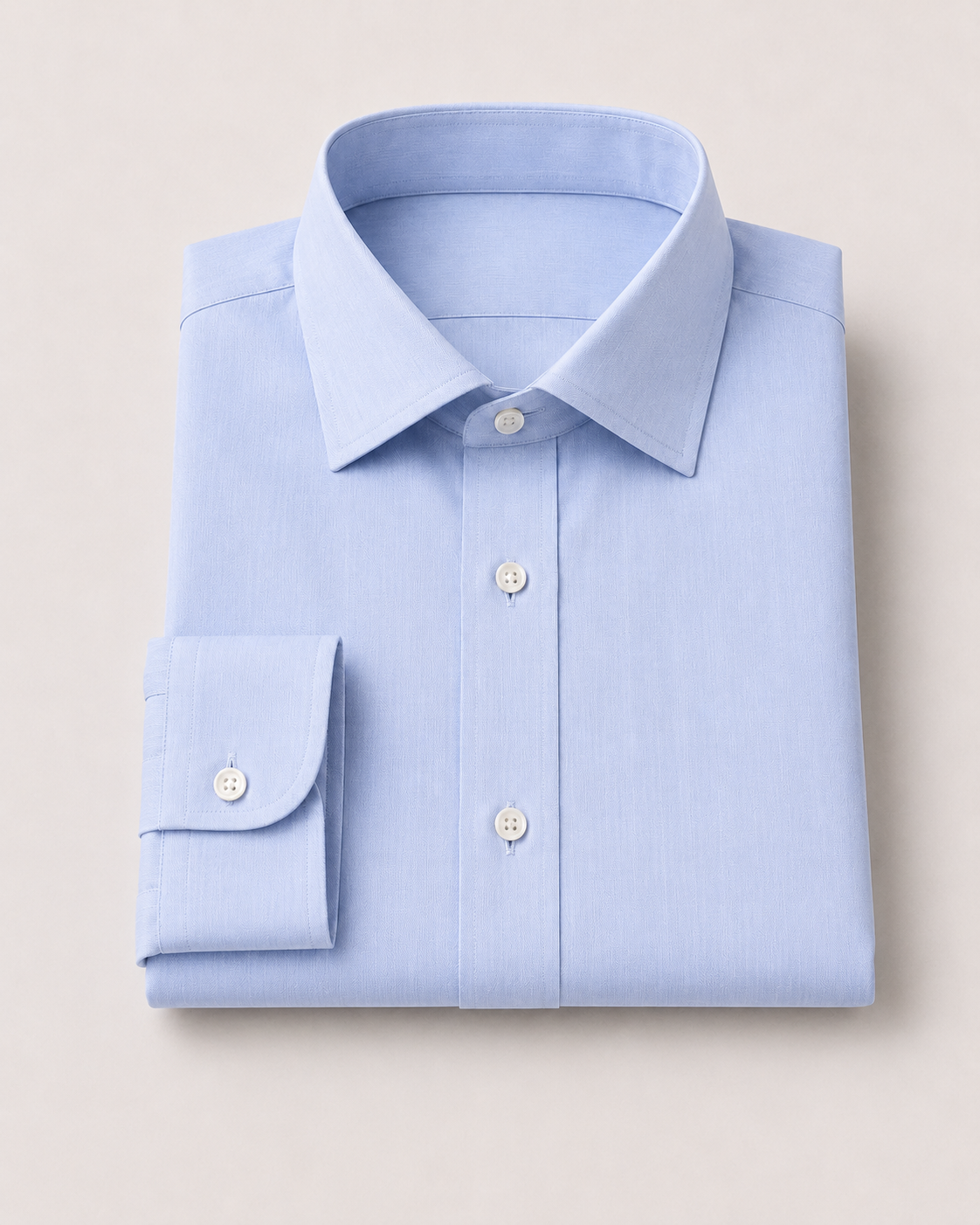
Made to measure shirting
Shirts patterned to the body. Collar, cuff, and placket cut to your specification and kept on record for future orders.
Alterations and resizing
Jackets, trousers, and coats adjusted to sit and hang as they should. Work carried out by the same hands that cut new commissions.
Formal wear
Hems, waist adjustments, and structural alterations for weddings, black tie, and other formal occasions.
Outerwear
Repairs and alterations on overcoats, topcoats, and other structured outerwear. Linings replaced and shoulders reset when needed.
Repairs and restoration
Hems, seams, and linings put right. Vintage and inherited pieces brought back to a state where they may be worn again.

What to expect

Here is what happens when you come in.

  1. 01

    Start with a conversation

    Bring the garment, the occasion, or simply an idea. We’ll talk through what you need and what makes sense.

  2. 02

    We assess the work

    Measurements are taken where needed, the garment or project is considered properly, and we explain the options before anything begins.

  3. 03

    The work takes shape

    Depending on the job, that may mean alterations, repairs, fittings, cloth selection, or a garment being made for you. We’ll tell you what to expect and when to return.

  4. 04

    Final fitting or collection

    We check the finished work with you and make sure everything is right before it leaves the shop.

Made-to-Measure

Our method, the catalogue, the process, and answers to what is most often asked.

Made to MeasureiOur approach

Our approach

Made to Measure: What it actually means.

Made to measure is often used loosely. In our practice it has a precise meaning, and we keep to it.

Your measurements, matched to our block

We do not simply size you into a stock size. A full set of measurements is taken at your appointment, together with a reading of posture, shoulder pitch, and stance. These are matched against our house block and adjusted to fit you.

A block refined for you

Your measurements are kept on file. Each order is cut from our house block, adjusted for how you measure and how you stand. A second suit, ordered years on, starts from the same adjustments, refined for how you have changed.

Made to MeasureiiThe Catalogue

The Catalogue

Six traditional Made-to-Measure must-haves for a Gentleman's Wardrobe.

We keep the catalogue narrow so that everything in it is done properly. Cloth books from Holland & Sherry, Fox Brothers, Dugdale, Loro Piana, and Drapers of Italy are kept in the shop.

Shirts
I

Shirts

Poplin, oxford, and Sea Island, cut for a proper collar.

Shirts cut from our house block, adjusted to your measurements, and sewn with hand-finished details. Collar shapes are drawn to sit correctly under a jacket lapel, which is where most shirts fail. Single or double cuff. Mother-of-pearl buttons. A minimum of four is asked at first order.

  • From three weeks, minimum of four at first order
  • Twelve collar shapes, drawn to your neck
  • Single, double, or convertible cuff
  • Alumo, Thomas Mason, Sea Island cotton
Trousers
II

Trousers

Flannels, worsteds, cavalry twills, and cottons.

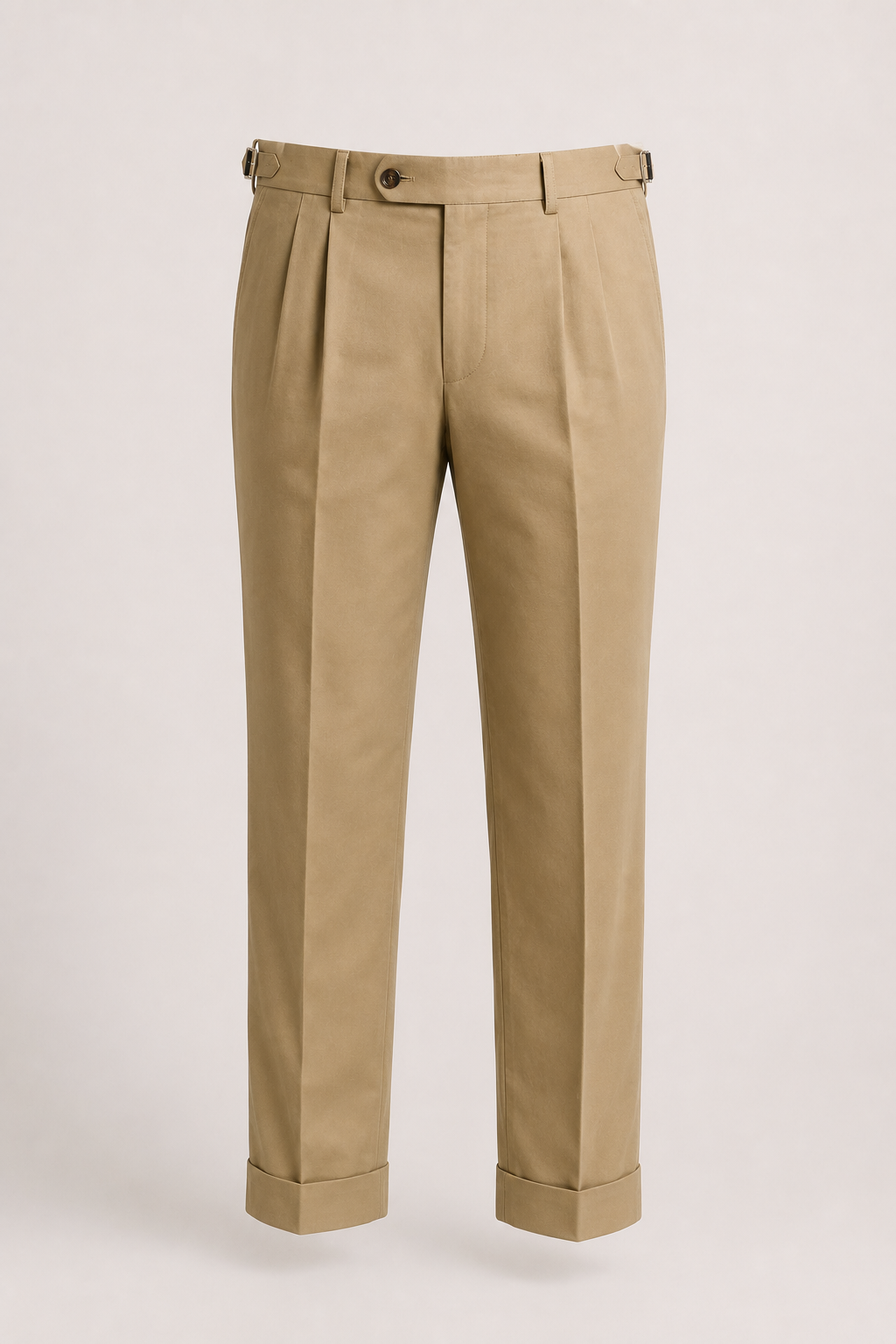
Trousers on their own block, cut to sit at the natural waist with a rise that stays put through the day. Single or double reverse pleats, or a clean flat front. Side adjusters or belt loops. Turn-ups where the cloth asks for them. A grey flannel and a pair of worsteds will carry a working wardrobe farther than most cupboards manage.

  • From three weeks
  • Side adjusters, belt loops, or braces buttons
  • Turn-ups from one and a half to two inches
  • Grey flannel, cavalry twill, tropical worsted, cotton twill
Sport coats or blazers
III

Sport coats or blazers

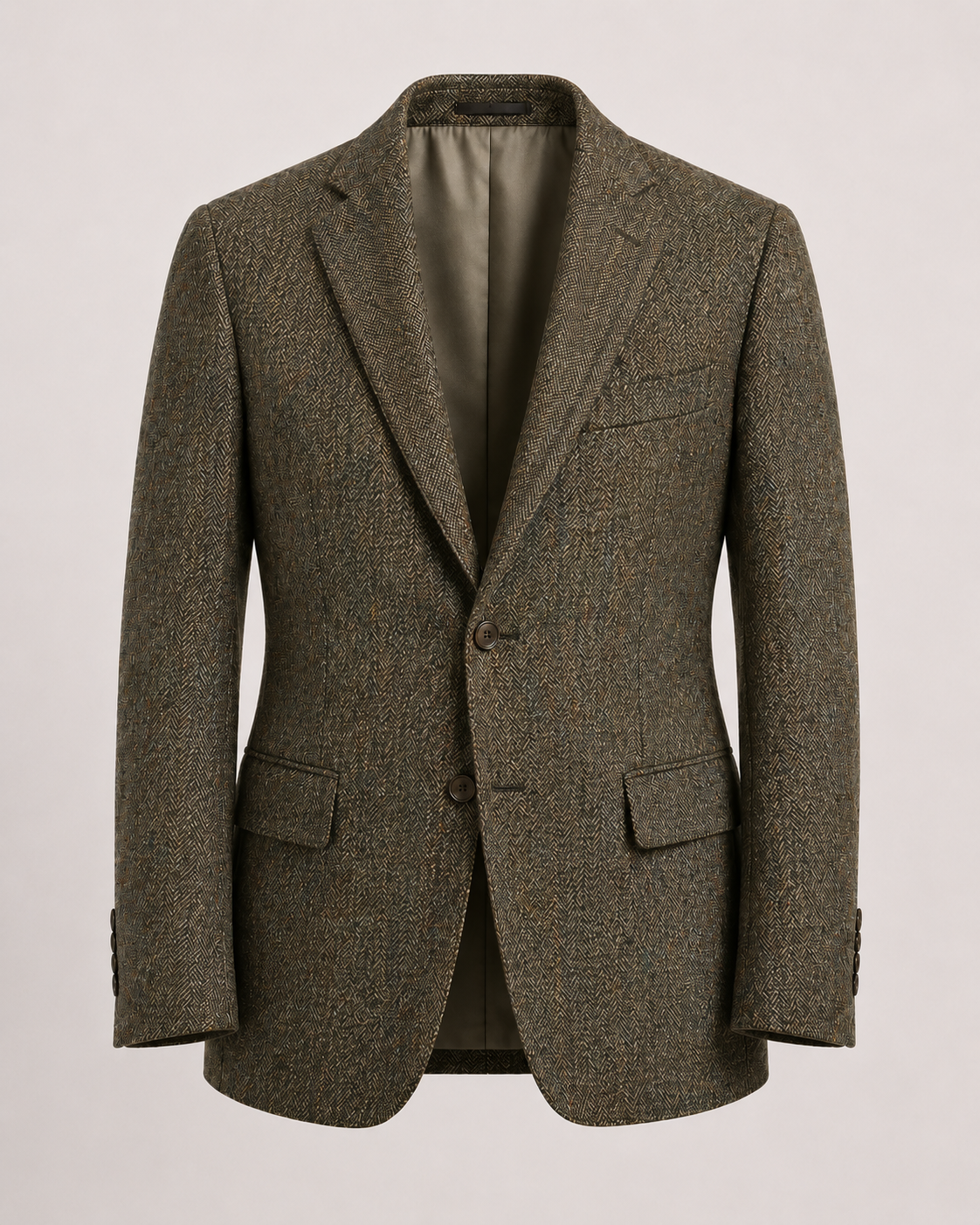
Tweed, hopsack, linen, and summer weights.

A softer construction than the suit jacket, cut a touch shorter and easier through the chest. We favour Fox Brothers tweed for winter, Solbiati linen for summer, and Dugdale hopsack for the seasons in between. Patch pockets and a slightly rolled lapel unless you prefer otherwise. Odd jackets are cut from our house block, adjusted to your measurements, not the top half of a suit.

  • From four weeks
  • Unlined or half-lined by preference
  • Patch or flap pockets, three or four buttons on the cuff
  • Fox, Dugdale, Solbiati, Loro Piana
Suits
IV

Suits

Two-piece and three-piece, English and Italian cloth.

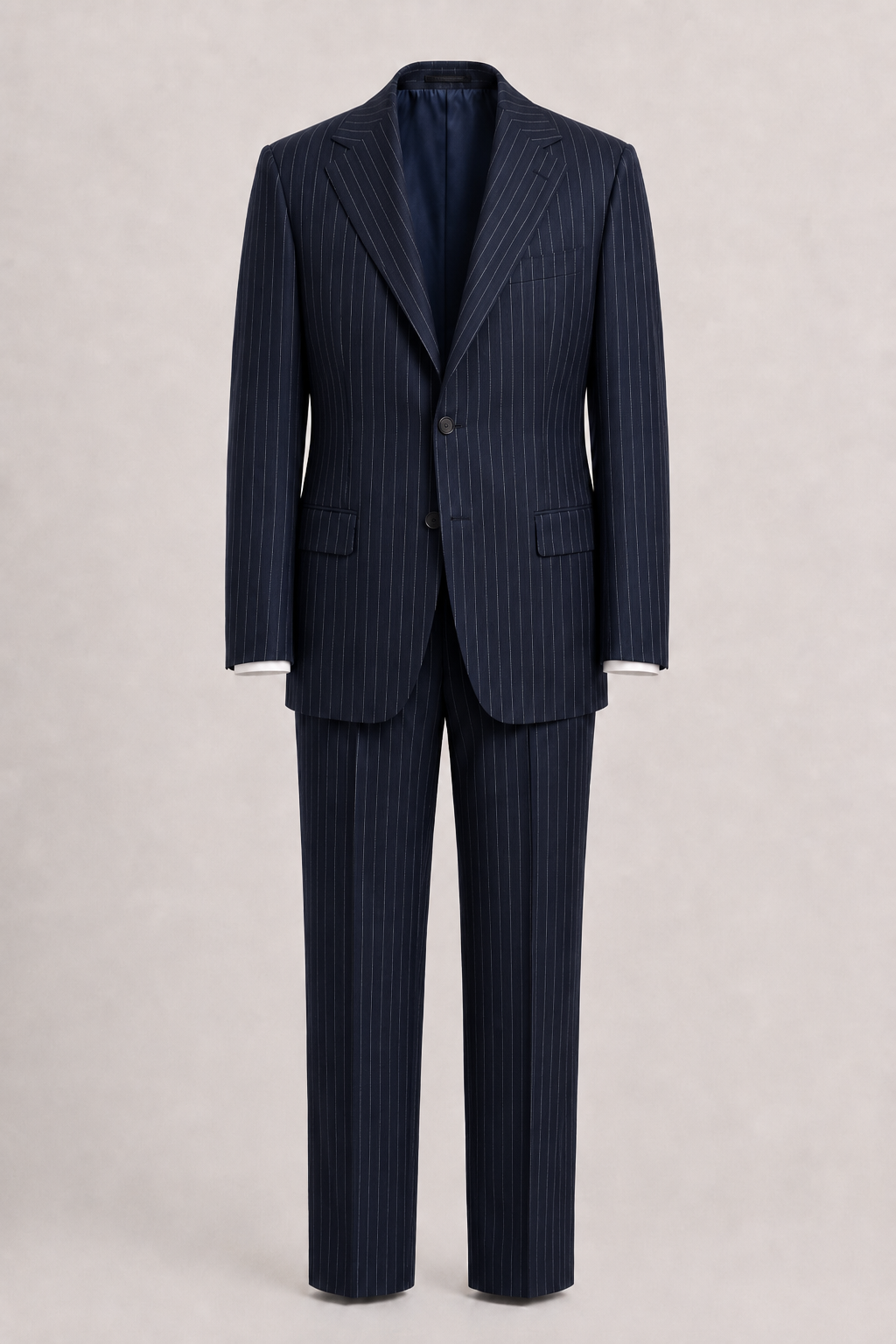
The greater part of the house's work. Suits are cut from our house block, adjusted to your measurements, with half canvas construction, machine-stitched with hand-finished details. We show a natural shoulder with soft drape, a lightly suppressed waist, and a length that flatters standing and seated. Measurements are taken at the first appointment, with one fitting at delivery.

  • Two-piece from three weeks, three-piece from five
  • Half canvas construction, hand-finished details
  • Working buttonholes, hand-finished edges
  • Trousers cut with a proper rise and a clean break
  • Cloth books from six English and Italian houses
Overcoats
V

Overcoats

Covert, cashmere, and heavy wool for a New England winter.

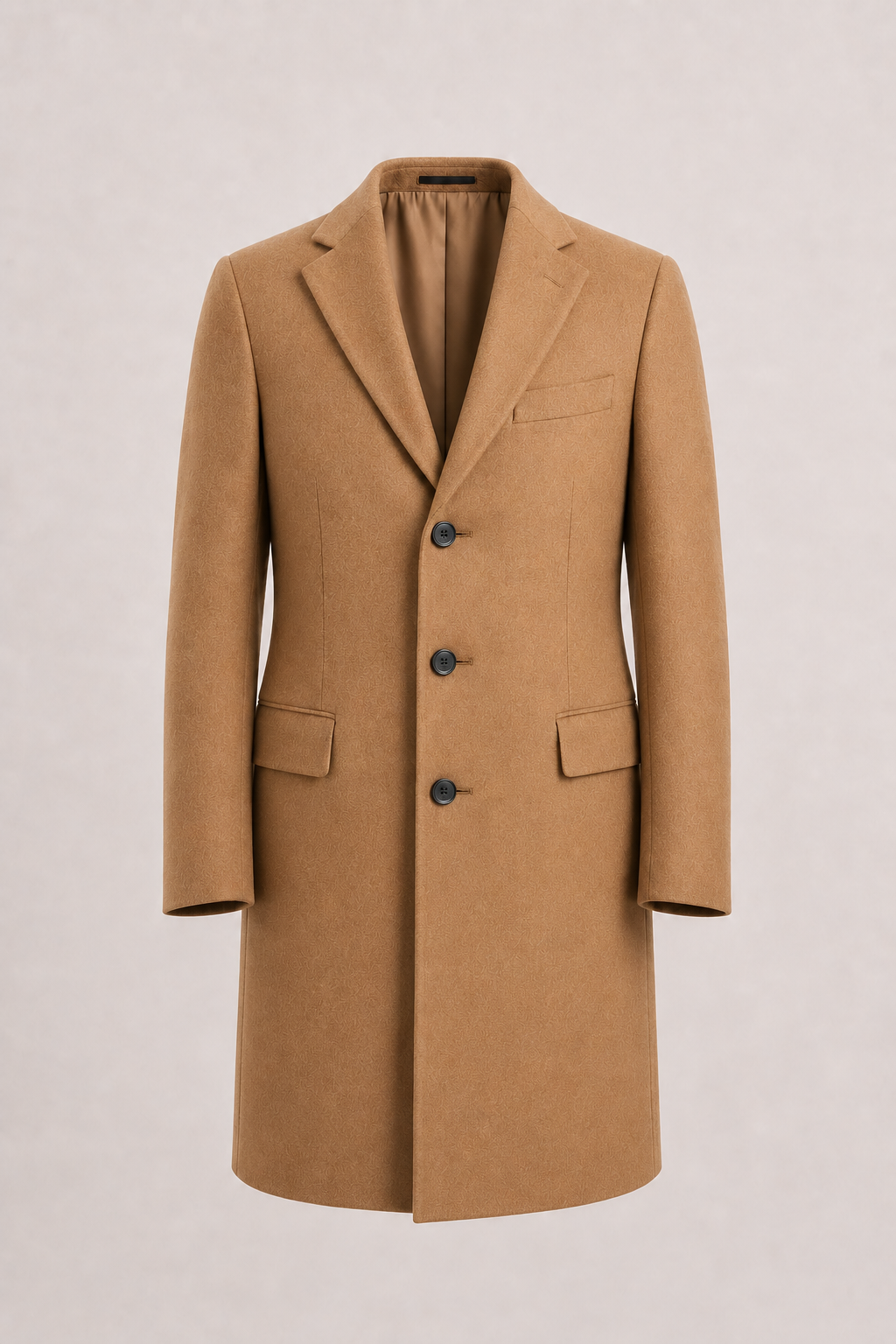
An overcoat is the garment most seen and least often made properly. Ours are cut from our house block, adjusted to your measurements, with a generous cloth and a length that covers the suit beneath. Polo, chesterfield, covert, and the single-breasted crombie are shown regularly. Cashmere is kept in the book. It is a fine cloth and will not, on its own, survive Boston in February.

  • From five weeks
  • Half canvas construction, hand-finished details
  • Polo, chesterfield, covert, crombie
  • Fox heavy wools, Loro Piana cashmere-and-wool
Formalwear
VI

Formalwear

Dinner jackets, tailcoats, and morning dress.

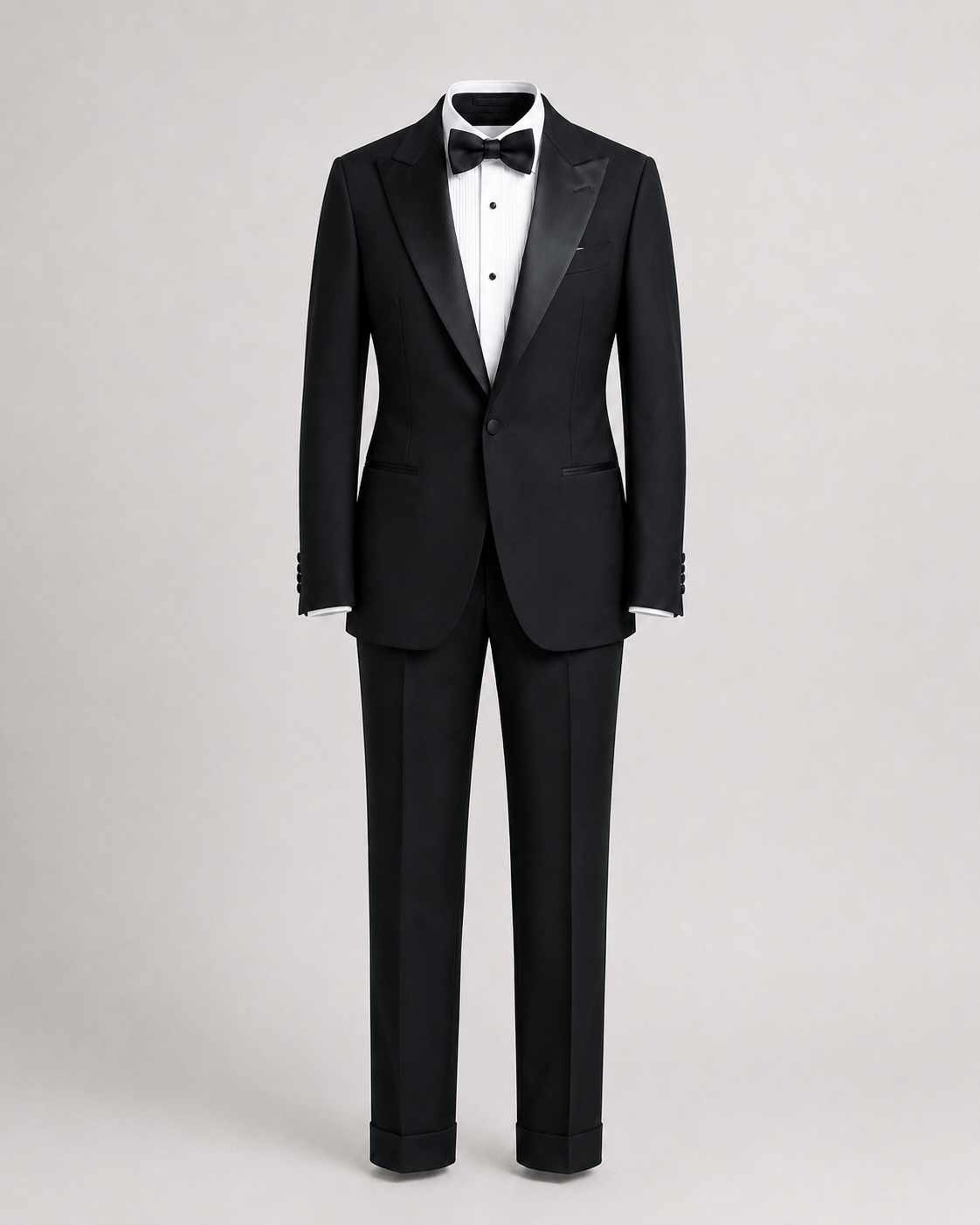
Evening clothes are cut the way they were meant to be: silk-faced peak or shawl lapel, covered buttons, side adjusters in place of a belt, and a trouser braid down the outside seam. Morning dress is made to order for weddings and the occasional funeral. Kindly allow six weeks. These garments are not rushed, and we will decline to try.

  • From six weeks
  • Peak or shawl lapel, silk-faced
  • Trouser braid, side adjusters, no belt loops
  • Morning dress cut in the traditional pattern
Made to MeasureiiiThe Process

The Process

Two visits, three to five weeks.

A commission unfolds over two appointments. Everything after that happens in the shop.

  1. I

    The conversation

    You come by the shop. We talk about what the garment is for, look at cloth, and take a full set of measurements against our house block. Shoulder, chest, waist, and stance are all noted. A deposit is taken. Forty-five minutes.

  2. II

    The fitting

    The finished garment is tried on in the shop. Sleeve length, hem, and waist are checked and adjusted on the spot where needed. Balance is confirmed before it leaves with you.

If anything is not right once you have worn it, bring it back. We will see to it.

Made to MeasureivBefore you visit

Before you visit.

Do I need an appointment?
For a made-to-measure commission, yes. Please call the shop. Alterations to garments already made by us may be brought in during shop hours without notice.
How long does a commission take?
A two-piece suit runs three to five weeks from the measurement appointment. Shirts are three weeks. Rush timelines may be possible, ask at your appointment.
What does a suit cost?
A two-piece made-to-measure suit begins at $1,200 in a house cloth. Cloth, cut, and detail drive the figure from there. A firm price is given at your first appointment.
Do you keep my measurements?
Yes. Your measurements are kept on file, so future orders move faster and fit consistently.
May I bring my own cloth?
Yes, though we ask that it be of a quality equal to the cloth we keep. We'll tell you plainly at your appointment whether it will make up well.
Do you take new clients?
Gladly. Please call the shop.
End of Made-to-Measure

Bespoke

For the client who wants a garment cut from a pattern drafted for him alone. A longer road, and a considered one.

BespokeiOur approach

Our approach

What bespoke actually means.

Bespoke is often used loosely. In our practice it has a precise meaning, and we keep to it.

Your measurements alone

We do not size you into a stock block and mark the alterations. Twenty-two measurements are taken at the first appointment, together with a careful reading of posture, shoulder pitch, and stance. These are yours, kept on file, and revisited at every commission.

A pattern drafted for you

From your measurements we draft a paper pattern in the cutting room upstairs. The pattern is yours. It is refined at each fitting and kept for the life of the client. A second suit, ordered ten years on, is cut from the pattern as it stood at your last visit, adjusted only for how you have changed.

BespokeiiThe Process

The Process

Six visits, six to ten weeks.

A commission unfolds over a small number of appointments. Nothing is hurried, and nothing is left to chance.

  1. I

    The conversation

    You come by the shop. We sit down, look at what you already wear, and speak about what the garment is for. No measurements are taken at this appointment unless you wish it. Twenty minutes, perhaps thirty.

  2. II

    Cloth and measurements

    Cloth books are brought out and narrowed to two or three. Twenty-two measurements are taken, and a note is made of shoulder pitch, stance, and posture. A deposit of one third is taken. An hour.

  3. III

    The pattern

    Between appointments we draft your paper pattern in the cutting room and cut the cloth. You are not needed for this, but you are welcome to come and see it in progress.

  4. IV

    Baste fitting

    The garment is assembled in white basting thread and fitted on you. The greater part of the shape of the finished suit is set at this appointment. Forty-five minutes.

  5. V

    Forward fitting

    The garment is now largely finished. Sleeves are set, collar sits, canvas is padded. Small refinements are made. Thirty minutes.

  6. VI

    The final

    You collect the garment. It is pressed, brushed, and hung. Balance is checked one last time. If anything is not right, it goes back on the table without charge and without argument.

A garment cut this way is not quicker to make than it ought to be, and we do not pretend otherwise. What you receive at the end is yours, and only yours, and will be right.

BespokeiiiGood to know

Good to know

Before you commission.

Do I need an appointment?
For a fitting or a new commission, yes. Please call the shop. Alterations to garments already made by us may be brought in during shop hours without notice.
How long does a commission take?
A two-piece suit runs six to eight weeks from the measurement appointment. A three-piece, an overcoat, or evening wear runs eight to ten. Shirts are four weeks from the first order and shorter thereafter.
What does a suit cost?
A two-piece bespoke suit begins at $3,800 in English worsted. Cloth, cut, and finish drive the figure from there. A firm price is given at the second appointment, and there are no adjustments at collection.
Do you keep my pattern?
Yes. Your pattern is kept on file for the life of the client. Second and subsequent commissions are cut from it and adjusted only for how you have changed.
May I bring my own cloth?
Yes, though we ask that it be of a quality equal to the cloth we keep. We will tell you plainly at the first appointment whether it will make up well.
Do you take new clients?
Gladly. Please call the shop. New clients are treated no differently from those we have dressed for forty years.
End of Bespoke